We had hundreds of reviews and no time to read them. Claude clusters them into themes we can act on.
The workflow
- Export reviews to a text file
- Ask Claude to cluster them into themes
- Rank themes by frequency and severity
- Bring the top 5 to planning
Result: A ranked, evidence-backed list of what to fix first.
The prompt
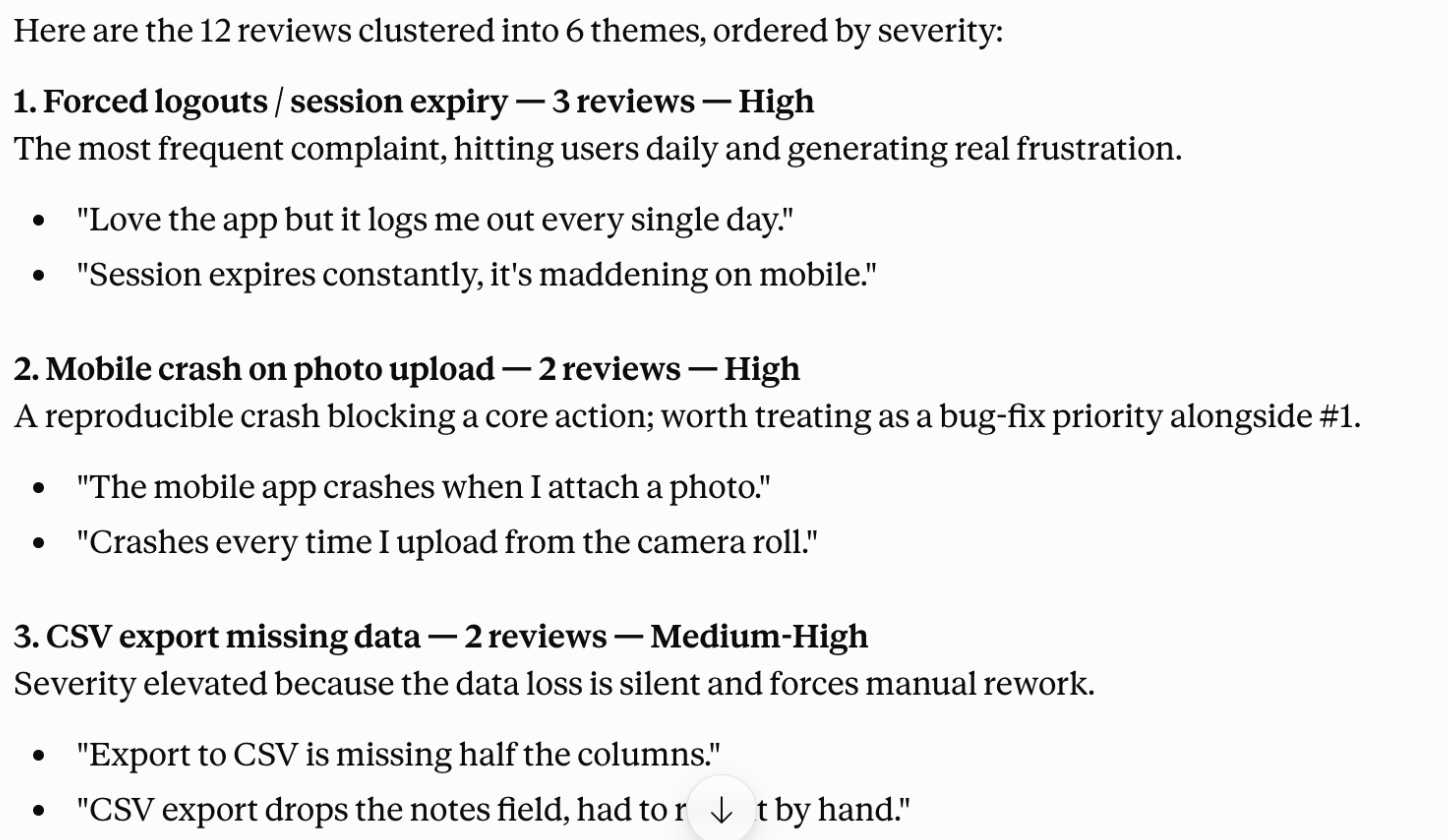
Cluster these reviews into themes. For each theme give a count, a severity, and 2 representative quotes. Reviews:
[PASTE]
A note on what follows. The workflow, the prompt and the result above come from the member. The notes below (why the prompt works, what to watch for, how to adapt it) were written with AI help.
Why this prompt works
The count next to each theme is what makes this usable in a roadmap conversation. Themes alone are just vibes, and everyone in the room already has vibes. Two quotes per theme does the other half: when I bring this to engineering, the quote is what lands, not my summary of the quote. Severity is the field I argue with most and keep anyway, because it forces the model to separate frequency from pain, and those come apart constantly. Our loudest theme was a mild annoyance mentioned by many people, while the one that actually lost us accounts had three mentions. I still assign severity myself in the end. I use its version as a first draft to disagree with.
What to watch for
- It clusters on wording, not on cause. "Slow" and "times out" can end up in different themes when they are the same bug.
- Counts are only as good as your sample. Reviews skew angry, and this makes a skewed sample look quantified.
- Single sharp complaints get folded into a bigger theme and disappear, which is where churn signals hide.
- Praise gets one theme called "positive feedback" and no detail, even when the praise says something specific about what to protect.
How to adapt it
- Cluster by cause:
Group by the underlying problem, not by the words used. Say what the shared cause is. - For churn risk, add
Flag any review that mentions cancelling, switching or a competitor. - Feeding several sources, add
Keep the source label on each quote.App store and sales-call feedback do not mean the same thing.
What good output looks like
Themes I would not have written myself. If it returns the four things I already talk about weekly, it grouped my assumptions rather than the data. Quotes should be verbatim, and I check two against the source every time. A theme with a count of two and high severity is usually the most interesting row on the page, so I read the small ones first.